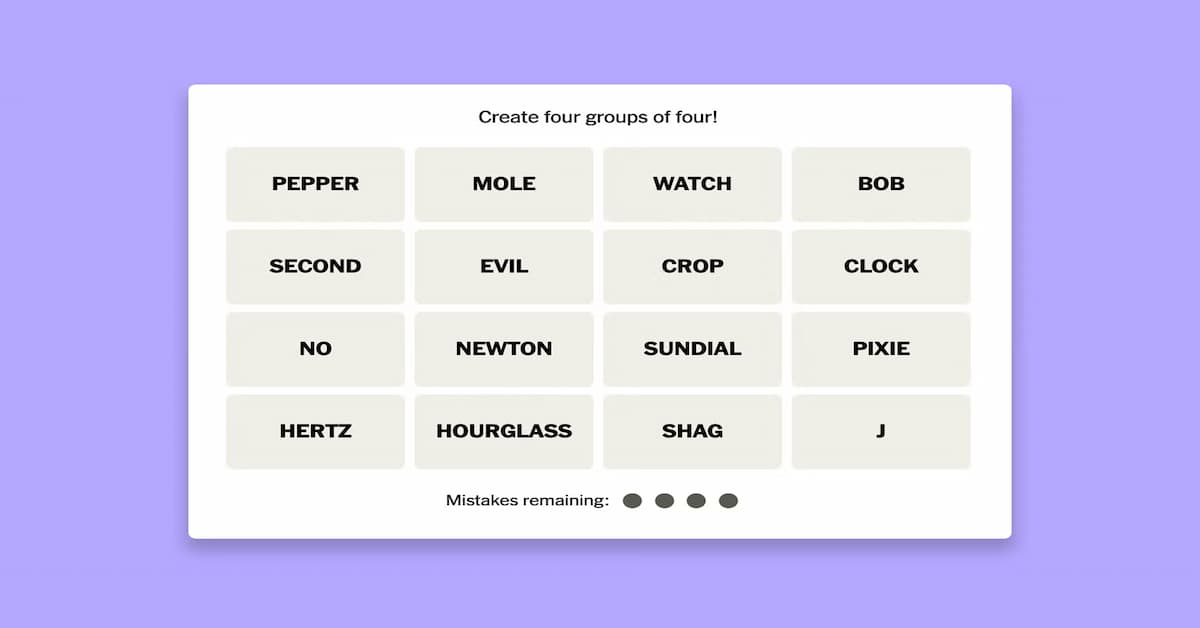
The daily search for a connection hint has quietly become part of the morning routine for puzzle lovers around the world. Somewhere between checking the news and solving Wordle, players open the connections game, stare at a grid of 16 words, and try to answer a deceptively simple question: what connects these words?
Published by The New York Times as part of its growing collection of NYTimes games, Connections has evolved into one of the most intellectually engaging word puzzles available online. It is not about speed. It is not about obscure vocabulary. Instead, it rewards patience, lateral thinking, and the ability to see patterns others miss.
This long-form guide explores everything about Connections — from how the game works and why hints matter, to how the idea of “connection” is defined inside the puzzle. If you regularly look up connections today, search for connection hints, or compare it with the strands game, this article is designed to answer all your questions in one place.
What Is the NYTimes Connections Game?
NYTimes Connections is a daily word puzzle that challenges players to group words based on a shared idea. Each puzzle contains:
- 16 words
- 4 hidden categories
- 4 words per category
- Only one correct solution
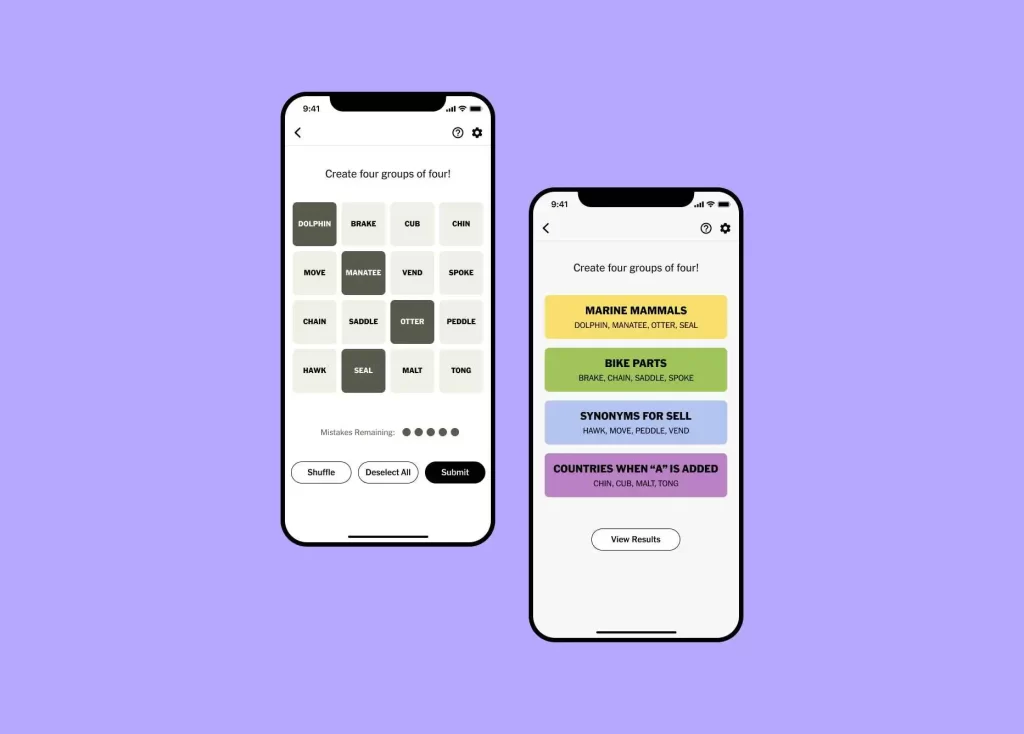
The player’s task is to identify four correct groupings before making four mistakes. Once a correct group is selected, it disappears from the grid, leaving fewer words to analyze.
Unlike crossword puzzles, there are no clues. Unlike Wordle, there is no guess-by-guess feedback on letters. Everything depends on how well you can recognize relationships between words — and how well you can ignore misleading overlaps.
Why Connections Feel Harder Than They Look
At first glance, Connections appears straightforward. Many of the words seem related. That is exactly the problem.
The puzzle is designed to:
- Present multiple plausible groupings
- Encourage false certainty
- Punish quick assumptions
For example, four words may all relate to movies, but only two of them belong to the correct category. Others might fit a different movie-based theme that is harder to spot.
This intentional ambiguity is why searches for connections hint and connections hints surge every day.
Define Connection: Meaning Inside the Puzzle
To properly understand the game, it helps to define connection as the editors intend it.
The traditional definition of connection refers to a relationship or association between things. In Connections, that relationship can take many forms:
Types of Connections Used in the Game
- Semantic connections
Words that share meaning or belong to the same category (e.g., fruits, tools, emotions). - Functional connections
Words that are used together or serve a similar purpose. - Linguistic connections
Shared prefixes, suffixes, homophones, or compound word structures. - Cultural connections
References to movies, books, celebrities, sports, or popular phrases. - Phrase-based connections
Words that commonly appear before or after the same word in everyday language.
The most difficult categories often rely on the last three types, which is why players struggle even when they “know” all the words.
How the Color System Works in Connections
Each group in the connections game is assigned a color that reflects its relative difficulty:
- Yellow – Easiest, most direct connection
- Green – Slightly more abstract
- Blue – Requires lateral or cultural thinking
- Purple – Most difficult, often wordplay-based
These colors are revealed after the puzzle is solved, not before. That design choice reinforces the game’s central challenge: you do not know which group is supposed to be easy.
Why People Search for “Connections Today”
The phrase connections today has become shorthand for players looking for help with the current puzzle without seeing spoilers from previous days.
Unlike static puzzles, Connections:
- Resets every night at midnight
- Has a unique solution each day
- Varies widely in theme and difficulty
This daily reset drives repeat searches, especially from players who want:
- A small nudge, not the full answer
- Confirmation that they are thinking in the right direction
- Help break a mental block
What Makes a Good Connections Hint?
A strong connections hint strikes a careful balance. It should guide the player without removing the satisfaction of solving the puzzle.
Most high-quality hints follow a few principles:
1. Category Descriptions Without Examples
Instead of naming words, hints describe the type of connection:
- “Associated with a superhero.”
- “Used in a popular board game.”
- “Words that pair with another word”
2. Difficulty-Ordered Guidance
Hints often mirror the yellow-to-purple difficulty scale, allowing players to start with easier groups.
3. No Word Elimination
Good hints avoid confirming or denying specific word placements. That keeps the puzzle intact.
This approach explains why connection hints are so popular: they preserve the challenge while reducing frustration.
Common Mistakes Players Make
Even experienced players fall into the same traps:
Going for the Obvious Group First
Connections often include a decoy group — words that clearly belong together but are not part of the correct solution.
Ignoring Word Form
Plural vs. singular, noun vs. verb, or spelling variations often matter more than meaning.
Overthinking Early
Sometimes the yellow group really is simple. Doubting everything equally can slow progress.
Strategies to Get Better at the Connections Game
If you want to rely less on connection hints searches, these strategies can help:
Say the Words Out Loud
Hearing words spoken often reveals shared phrasing or rhythm.
Shuffle the Board
Changing word positions breaks visual grouping bias.
Look for the “Weird” Words
Unusual or specific words often belong to the purple group.
Solve Three, Reveal One
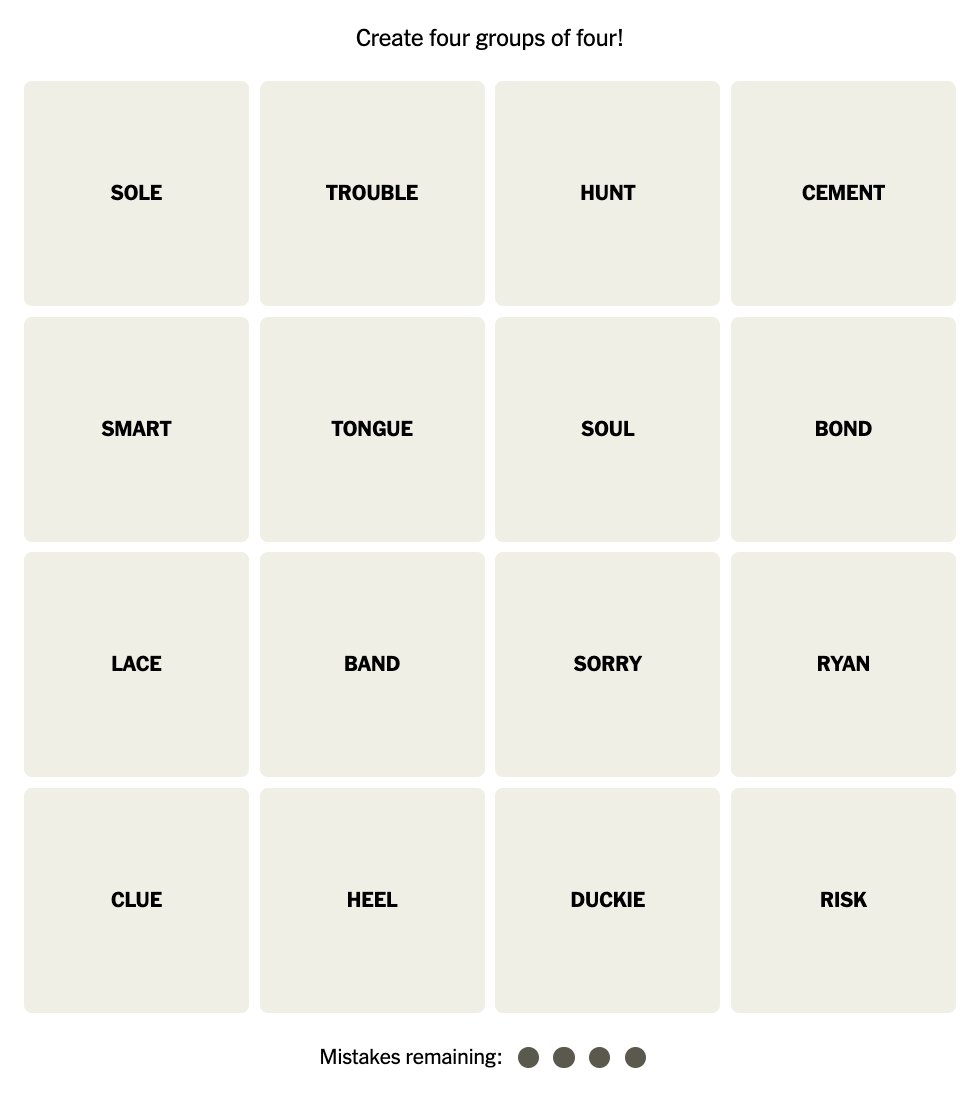
If you confidently solve three groups, the remaining four words must form the final category.
NYTimes Connections and the Rise of Social Word Games
The success of the NY Times connections is part of a larger trend. Word games have become a shared cultural experience rather than a solitary pastime.
Daily puzzles encourage:
- Friendly competition
- Routine engagement
- Social sharing without spoilers
Like Wordle before it, Connections thrives because it gives players something to think about — and talk about — every day.
How Connections Compares to Strands NYT
Another frequent search alongside Connections is strands nyt.
NYT Strands differs in structure but shares the same design philosophy.
| Feature | Connections | Strands |
|---|---|---|
| Core mechanic | Grouping words | Finding hidden words |
| Focus | Relationships | Patterns |
| Difficulty curve | Category-based | Discovery-based |
| Player mindset | Analytical | Exploratory |
Many players alternate between the two, using Connections for logical challenge and Strands for relaxed problem-solving.
Why the Concept of “Connection” Resonates
Part of the appeal lies in the word itself. The definition of connection extends beyond puzzles. Humans are wired to find meaning, patterns, and relationships.
Connections taps into that instinct by:
- Rewarding insight over trivia
- Encouraging curiosity
- Challenging assumptions
The game feels fair even when it is difficult — a rare quality in puzzles.
The Editorial Philosophy Behind Connections
The puzzle does not aim to trick players unfairly. Instead, it invites them to think more flexibly.
Editors design puzzles to:
- Test multiple types of intelligence
- Blend language with culture
- Offer a “click” moment when the solution appears
That moment — when four words suddenly make sense together — is why players come back.
Why Connections Hints Will Always Be in Demand
No matter how skilled players become, some puzzles will resist quick solutions. That ensures the ongoing popularity of connections hint searches.
Hints provide:
- Momentum when stuck
- Validation of thought process
- A way to enjoy the puzzle without quitting
As long as the game continues to evolve, so will the need for guidance.
Final Thoughts: Mastering the Connections Game
The connections game is not about knowing more words than anyone else. It is about seeing relationships others overlook and being comfortable with uncertainty.
Whether you check connections today every morning, compare it with the strands game, or simply want to understand the definition of connection in a deeper way, the puzzle offers something rare: a daily exercise in thinking differently.
Tomorrow’s grid will arrive quietly at midnight. Sixteen new words will appear. And once again, the question will be the same:
What connects them?