
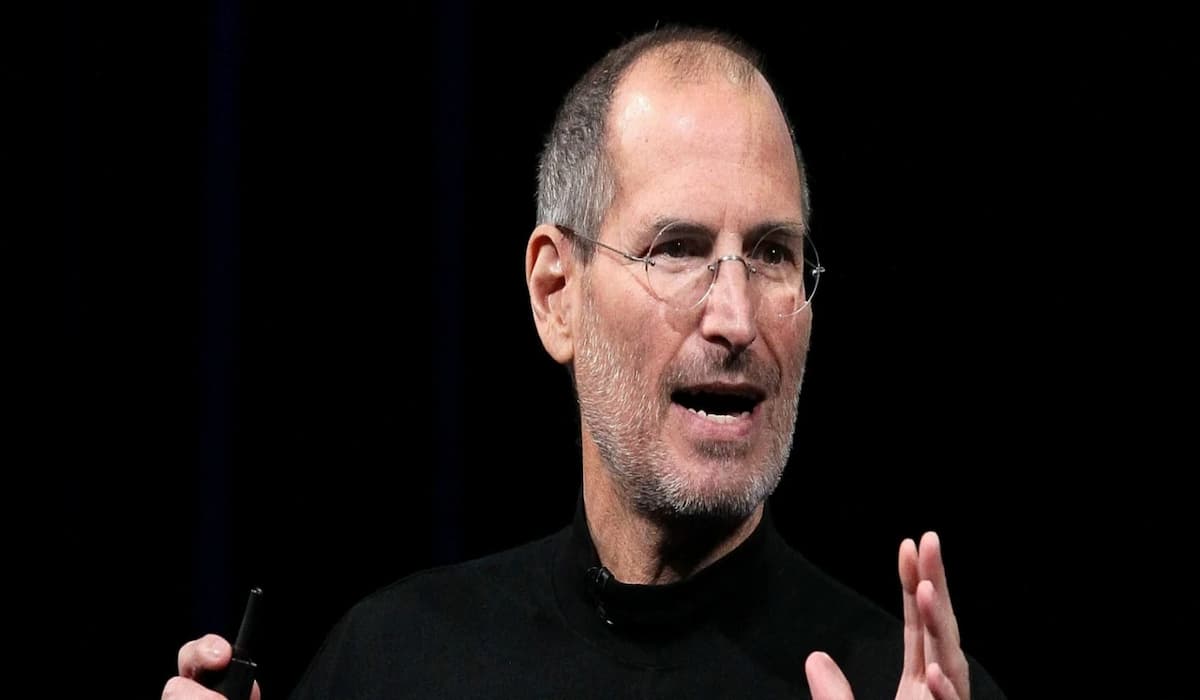
Steve Jobs was often described as intense, demanding and relentlessly focused. But those who worked closely with him noticed something quieter — a habit that shaped the core of steve jobs thinking.
He walked.
Not occasionally. Not casually. Walking was woven into how he solved problems, held meetings and developed ideas that would later reshape entire industries.
For entrepreneurs searching for a sharper innovation mindset, the pattern behind Steve Jobs’ thinking offers something surprisingly practical.
The 10-Minute Rule and the Entrepreneur’s Reset
Jobs followed a simple rule. If he struggled with a problem for more than 10 minutes, he stood up and went outside.
Instead of forcing a solution at his desk, he shifted environments.
For founders, this matters. Entrepreneurial work often traps leaders in intense analytical loops — projections, product decisions, investor updates, customer feedback. The brain stays in a high-control mode for too long.
Jobs seemed to understand something many executives miss: insight rarely appears under pressure.
By stepping away, he allowed his mind to reorganise information. The break wasn’t avoidance. It was strategy.
This small behavioural shift became part of the larger system behind steve jobs thinking — deliberate focus followed by deliberate release.
What Science Says About Steve Jobs Thinking
Modern neuroscience helps explain why this worked.
Creative problem-solving relies on three major brain systems:
- The default mode network, active during daydreaming and reflection. It helps generate new ideas and unexpected connections.
- The executive network, responsible for logic, planning and focused reasoning.
- The salience network, which switches between the two.
Entrepreneurs often overuse the executive network. Spreadsheets and pitch decks demand it. Strategic planning depends on it.
But breakthrough innovation — the kind associated with Apple under Steve Jobs — requires interaction between focused analysis and relaxed reflection.
Jobs’ pattern fits this cycle almost perfectly. First, he immersed himself in the problem. Then he walked. During those walks, mental control loosened. Associations flowed more freely. Ideas recombined.
Studies have shown that people generate more original uses for everyday objects while walking compared to sitting. Movement appears to increase creative fluency.
For entrepreneurs, this suggests something practical: innovation is not only about intelligence. It is about rhythm.
Walking Meetings and Leadership Thinking
Jobs did not only walk alone. He preferred walking meetings.
His biographer, Walter Isaacson, noted that serious conversations often happened outdoors, not in boardrooms.
At Apple Inc., discussions about design and product direction frequently took place on foot. Even the circular layout of Apple Park was built to encourage movement.
For entrepreneurs, this reflects a deeper layer of steve jobs thinking: innovation is social.
Research shows that when two people walk together, they naturally synchronise their pace. This physical synchronisation subtly increases psychological connection — even without conversation.
In experiments, pairs who walked together evaluated each other more positively afterward than pairs who simply sat in the same room.
For startup founders, walking meetings may lower defensiveness, encourage openness and create better idea exchange. A change in posture can shift a power dynamic. Side-by-side movement feels different from across-the-table confrontation.
Silence as a Creative Tool
Another detail often overlooked: many of Jobs’ walks were quiet.
Jony Ive, Apple’s former chief design officer, once reflected that long silent walks were common between them. Conversation, he suggested, can interrupt thinking.
Entrepreneurs are encouraged to talk constantly — to pitch, persuade and present. Yet steve jobs thinking included long stretches of silence.
Silence allows ideas to mature before they are judged. It prevents premature filtering. It creates space for clarity.
For founders building new products, that restraint can be powerful. Speaking too early can collapse fragile ideas. Walking quietly can let them strengthen.
Predicting the Future by Inventing It
Jobs famously said, “The best way to predict the future is to invent it.”
This line is often quoted in startup circles. But it was not just motivational language. It reflected a specific cognitive approach.
Instead of relying solely on customer surveys, Jobs believed in anticipating desires customers could not yet articulate.
That required imaginative projection — seeing a product before the market did.
The thinking behind the iPhone and iPad did not emerge from traditional focus groups. It emerged from an internal conviction about where technology and human behaviour were heading.
For entrepreneurs, this highlights a core lesson: innovation requires structured analysis, but also the courage to trust insight.
And insight often arrives away from the desk.
The Entrepreneur’s Practical Takeaway
Steve Jobs’ thinking was not mystical. It was behavioural.
He:
- Focused intensely on a problem.
- Stepped away when stuck.
- Used walking to reset mental patterns.
- Held important conversations while moving.
- Valued silence as much as speech.
Many other thinkers — including Friedrich Nietzsche and Immanuel Kant — were known for strict walking routines. They understood that physical movement can stimulate mental movement.
For entrepreneurs navigating constant uncertainty, this may be one of the simplest productivity habits to adopt.
Not every walk will produce a breakthrough.
But when the mind feels locked, staying seated rarely helps.
Final Reflection on Steve Jobs Thinking
It would be inaccurate to say walking alone made Steve Jobs a visionary. His discipline, aesthetic sensitivity and uncompromising standards also defined him.
Yet walking was not incidental. It was integrated into how he thought, led and created.
For entrepreneurs chasing the next product idea or struggling with strategic direction, the lesson is practical rather than romantic.
Stand up.
Step outside.
Let your mind switch modes.
You may not build the next Apple. But you may unlock clearer thinking — and that is often where innovation begins.
