
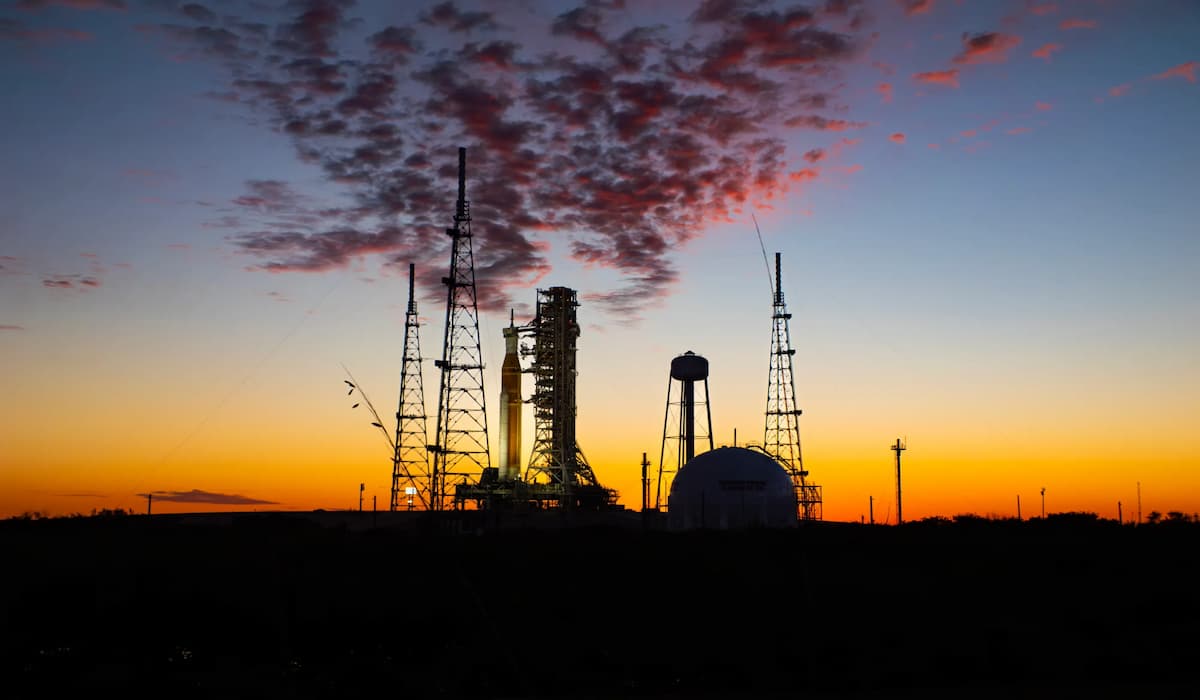
Kennedy Space Center, Florida — February 13, 2026
Engineers at NASA are reviewing data from a confidence test carried out on February 12 as preparations continue for the agency’s Artemis II mission to the Moon.
The test, conducted at Kennedy Space Center, focused on the rocket’s core stage liquid hydrogen system — a critical component of the Space Launch System (SLS), which will carry astronauts aboard the Orion Multi-Purpose Crew Vehicle.
Partial Fueling to Assess New Seals
During the operation, teams partially filled the SLS core stage liquid hydrogen tank. The objective was to assess newly replaced seals in an area used to load propellant into the rocket.

These seals were installed after a previous wet dress rehearsal identified a hydrogen leak at a key interface. The latest test aimed to verify that the modifications are performing as expected under cryogenic conditions.
Engineers gathered data at the same core stage interfaces where the earlier leak occurred. According to NASA, several primary test objectives were met, giving teams increased confidence in the system’s performance.
Ground Equipment Issue Slows Flow
However, the test was not without complications.
Teams encountered an issue with ground support equipment that reduced the flow rate of liquid hydrogen into the rocket. The problem was traced not to the rocket itself but to infrastructure on the ground that assists with fueling operations.
NASA said engineers will purge the affected line over the weekend to ensure proper environmental conditions. They will also inspect the ground equipment and replace a filter suspected of contributing to the reduced flow.
Officials described the situation as part of the deliberate, step-by-step approach taken before committing to flight.
Next Test Still Planned This Month
Engineers will now analyze the collected data before determining a schedule for the next major milestone — a second wet dress rehearsal planned for later this month.
A wet dress rehearsal simulates launch day procedures, including fully fueling the rocket, without liftoff. It is considered one of the final large-scale tests before launch.
For now, March remains the earliest potential launch window for Artemis II, though NASA has not confirmed a specific date.
Artemis II’s Role in Lunar Exploration
Artemis II will be the first crewed mission in NASA’s Artemis program and the first time astronauts travel around the Moon since the Apollo era. The mission is designed to test the integrated performance of the SLS rocket and Orion spacecraft in deep space with a human crew aboard.
The spacecraft, visible on Launch Pad 39B as the sun sets behind it, represents years of development and testing. Engineers continue to emphasize that each rehearsal and adjustment is part of ensuring astronaut safety.
NASA officials have repeatedly stated that launch readiness will depend on technical findings rather than calendar deadlines.
As data review continues, teams at Kennedy Space Center remain focused on verifying every system before setting the next countdown in motion.